
Nearsighted vs. Farsighted: A Complete Guide to Vision Correction
02
Apr
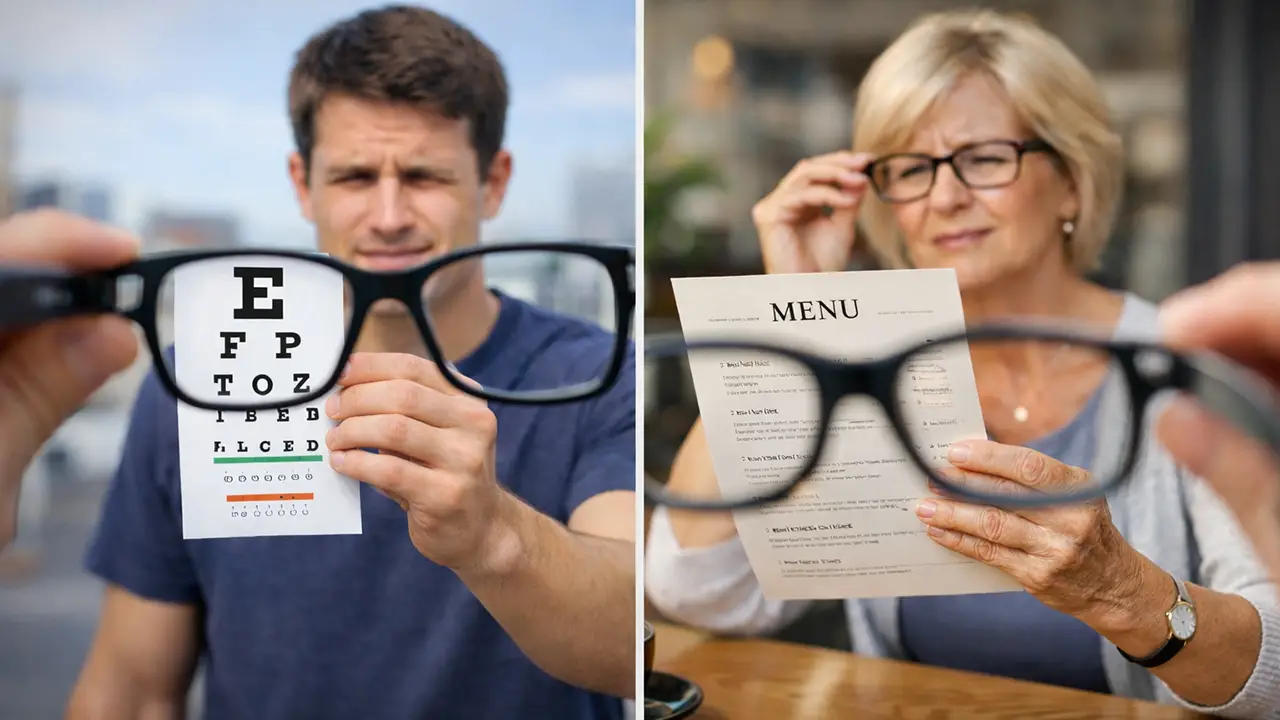
If you’ve ever squinted at a distant road sign or struggled to read the menu at a restaurant, you’re not alone. Vision problems affect millions of Americans, with over 40% experiencing nearsightedness and roughly 10% dealing with farsightedness.1,2 But what’s the difference between these two common refractive errors? And more importantly, which treatment option is right for you?
Understanding whether you’re nearsighted or farsighted is the first step toward achieving the glasses-free vision you deserve. In this guide, we’ll break down the key differences between these conditions, explore their symptoms, and discuss how advanced refractive surgery can permanently correct your vision at Alliance Vision Institute.
What is Nearsightedness (Myopia)?
Nearsightedness, medically known as myopia, is a refractive error that makes distant objects appear blurry while nearby objects remain clear. If you find yourself squinting at the movie screen or struggling to read street signs while driving, you may be nearsighted.
How Nearsightedness Develops
Myopia occurs when light entering your eye focuses in front of the retina rather than directly on it. This happens due to one of two reasons:
- An eyeball that’s too long — The distance from the front of your eye to the retina is longer than normal
- A cornea that’s too curved — The cornea (the clear front surface of your eye) has too much curvature, causing light to bend too sharply
Both of these structural variations cause the same result: distant vision becomes blurry while near vision remains sharp.
Symptoms of Nearsightedness
Common signs that you may be nearsighted include:
- Blurry vision when looking at distant objects (road signs, classroom boards, presentations)
- Squinting to see clearly
- Eye strain and fatigue, especially during activities requiring distance vision
- Headaches after prolonged visual effort
- Difficulty with night driving due to reduced contrast sensitivity
- Excessive blinking or eye rubbing
If you notice any of these symptoms, it’s time to schedule a comprehensive eye exam with our team.
How Nearsightedness Affects Daily Life
Untreated myopia can significantly impact your quality of life. You might avoid activities like sports or driving, experience reduced academic or work performance, or feel frustrated by constant dependence on glasses or contacts. The good news? Advanced surgical solutions can permanently correct your vision.
What is Farsightedness (Hyperopia)?
Farsightedness, or hyperopia, is the opposite of myopia. With this refractive error, nearby objects appear blurry while distant objects remain relatively clear. You might notice difficulty reading small print or focusing on close-up tasks.
How Farsightedness Develops
Hyperopia occurs when light focuses behind the retina instead of directly on it. This typically results from:
- An eyeball that’s too short — The distance from the front of your eye to the retina is shorter than normal
- A cornea that’s too flat — The cornea doesn’t have enough curvature to bend light properly
- A lens that’s too flat — The eye’s lens doesn’t contribute enough focusing power
Any of these structural variations can cause farsightedness, making near vision tasks challenging.
Symptoms of Farsightedness
If you’re farsighted, you may experience:
- Blurry vision when reading or doing close-up work
- Eye strain and discomfort during near tasks (reading, computer work, crafting)
- Headaches, especially after prolonged near vision activities
- Squinting to focus on nearby objects
- Burning or aching sensations in or around the eyes
- Difficulty with sustained focus on close objects
Interestingly, some farsighted individuals may not notice symptoms initially because the eye’s lens can compensate by working harder—a process called accommodation. However, this extra effort often leads to eye strain and fatigue over time.
Nearsighted vs. Farsighted: Key Differences
| Aspect | Nearsightedness (Myopia) | Farsightedness (Hyperopia) |
|---|---|---|
| What’s blurry | Distant objects | Nearby objects |
| What’s clear | Close objects | Distant objects |
| Light focus | In front of retina | Behind retina |
| Common symptoms | Distance blur, squinting | Eye strain, reading difficulty |
Refractive Surgery Options
Modern vision correction procedures are designed to treat both nearsightedness and farsightedness by improving how light focuses within the eye. The right option depends on your prescription, eye anatomy, age, and lifestyle.
LASIK (Laser-Assisted In Situ Keratomileusis)
LASIK reshapes the cornea to improve how light is focused on the retina.
Best for:
Patients with mild to moderate myopia, hyperopia, or astigmatism
Key advantages:
- Rapid visual recovery
- Minimal discomfort
- Widely applicable for many prescriptions
Recovery:
Most patients notice improved vision within 24–48 hours
PRK (Photorefractive Keratectomy)
PRK reshapes the cornea without creating a flap, making it a strong alternative for certain patients.
Best for:
Patients with thinner corneas or those involved in contact sports
Key advantages:
- No corneal flap
- Preserves structural integrity of the cornea
- Effective for both myopia and hyperopia
Recovery:
Longer initial healing period, with vision improving over several weeks
EVO ICL™ (Implantable Collamer Lens)
EVO ICL involves placing a biocompatible lens inside the eye without reshaping the cornea.
Best for:
Patients with moderate to high myopia or thin corneas
Key advantages:
- Does not remove corneal tissue
- Can be removed or exchanged if needed
- Provides high-quality vision correction
Recovery:
Vision improvement typically occurs within a few days
Refractive Lens Exchange (RLE)
Refractive lens exchange replaces the eye’s natural lens with an artificial intraocular lens (IOL).
Best for:
Patients over 40–50, especially those experiencing presbyopia
Key advantages:
- Corrects both distance and near vision
- Reduces future cataract risk
- Suitable for a wide range of prescriptions
Recovery:
Gradual improvement over several weeks
Quick Comparison of Vision Correction Options
| Procedure | Best For | Treats | Recovery | Key Advantage |
|---|---|---|---|---|
| LASIK | Most patients | Myopia, Hyperopia | Fast | Quick recovery |
| PRK | Thin corneas | Myopia, Hyperopia | Slower | No flap |
| EVO ICL | High myopia | Myopia | Fast | Removable lens |
| RLE | Age 40+ | Myopia, Hyperopia, Presbyopia | Moderate | Lens replacement |
Which Surgical Option is Right for You?
Choosing the right procedure depends on several key factors:
- Age and presbyopia: Patients over 40 may benefit from RLE
- Corneal thickness: Thinner corneas may favor PRK or EVO ICL
- Prescription strength: Higher prescriptions may be better suited for EVO ICL or RLE
- Lifestyle: Athletes or those in contact sports may prefer PRK
- Dry eye concerns: Some procedures may be more suitable depending on symptoms
A comprehensive evaluation is essential to determine the most appropriate approach for your eyes.
Non-Surgical Options
For patients who are not candidates for surgery or prefer non-surgical solutions:
Eyeglasses
A simple and effective way to correct both myopia and hyperopia.
Contact Lenses
Provide a wider field of vision and flexibility for active lifestyles.
Myopia Management (for children)
- Multifocal contact lenses
- Orthokeratology (Ortho-K)
- Low-dose atropine eye drops
Am I a Candidate for Refractive Surgery?
Most adults with stable vision may be candidates, but eligibility depends on:
Ideal Candidates
- Age 18+ with stable prescription
- Healthy eyes and corneas
- No active eye disease
Factors That May Affect Candidacy
- Very high prescriptions
- Thin corneas
- Dry eye symptoms
- Pregnancy or nursing
The only way to determine candidacy is through a comprehensive eye exam.
What to Expect During Your Consultation
Your consultation includes:
- Detailed vision testing
- Corneal mapping and measurements
- Eye health evaluation
- Discussion of goals and lifestyle
- Personalized treatment recommendations
Frequently Asked Questions
How long do results last?
Vision correction procedures are designed to provide long-term results. However, natural age-related changes such as presbyopia can still occur over time.
Is refractive surgery painful?
Numbing drops are used during the procedure. Mild discomfort may occur afterward depending on the treatment.
Can astigmatism be corrected?
Yes. Most modern procedures can address astigmatism along with nearsightedness or farsightedness.
Is EVO ICL reversible?
Yes. The lens can be removed or exchanged if needed.
Can both eyes be treated at the same time?
Yes, in most cases both eyes are treated during the same visit.
Take the Next Step Toward Clear Vision
Whether you’re nearsighted, farsighted, or exploring your options, the first step is a comprehensive consultation. With advanced procedures like LASIK, PRK, EVO ICL, and RLE, vision correction can be tailored to your unique needs and goals.
Schedule your consultation at Alliance Vision Institute to learn which approach may be right for you.
Sources
1 Cleveland Clinic. Myopia (Nearsightedness). Available: https://my.clevelandclinic.org/health/diseases/8579-myopia-nearsightedness. Accessed March 24, 2026.
2 National Eye Institute. Farsightedness. Available: https://www.nei.nih.gov/sites/default/files/health-pdfs/Farsightedness.pdf#. Accessed March 24, 2026.