

Dry eye is a chronic condition driven by blocked oil glands, eyelid inflammation, and unstable tear film — and drops alone cannot fix the cause. Alliance Vision Institute offers two in-office therapies, LipiFlow® thermal pulsation and intense pulsed light (IPL), that target the specific biological mechanisms behind your symptoms. Dr. Taylor Strange and your eye care team start every visit with a complete dry eye workup so your treatment plan is built around your biology, not a generic protocol.
Dry Eye Is Not a Drops Problem, It Is a Tear Film Problem
Every time you blink, your eyes coat themselves in a precision-built tear film made of three layers: oil from your meibomian glands, water from your lacrimal glands, and a mucin layer that holds it all to the surface of the cornea. When any one of those layers fails, the others cannot make up the difference, and the surface of your eye begins to suffer at the cellular level.
For decades, the standard of care was artificial tears, warm compresses, and lid hygiene at home. These tools still reduce symptoms for many patients. The relief is real, and the science is well established.
But drops cannot unblock a clogged oil gland, calm inflamed eyelid skin, or remove the bacterial biofilm that drives chronic blepharitis. At Alliance Vision Institute, we do not stop at symptom management when in-office therapies can correct the cause.
For patients in Fort Worth, Dallas, and the broader DFW metroplex, Dr. Strange and your eye care team offer two evidence-backed treatments aimed directly at the biology of dry eye: LipiFlow® and IPL. Two mechanisms. Two fixes. Each grounded in clinical evidence.
On This Page
- Why North Texas Is Hard on Your Eyes
- The Two Main Types of Dry Eye
- LipiFlow Thermal Pulsation Therapy
- Intense Pulsed Light (IPL) Therapy for Dry Eye
- How We Decide Which Treatment You Need
- Dry Eye Before LASIK and Cataract Surgery
- Why Patients Choose Alliance Vision Institute
- Patient Reviews and Testimonials
- Frequently Asked Questions
- Schedule Your Dry Eye Evaluation

Why North Texas Is Hard on Your Eyes
Dry eye affects an estimated 5 to 50 percent of adults globally, and prevalence climbs steadily with age and is consistently higher in women. In the United States, researchers estimate more than 16 million adults have been diagnosed with the disease, and millions more have symptoms they never report.
North Texas adds its own pressure. Long, hot summers, low humidity, frequent wind, and high seasonal pollen counts speed up tear evaporation and irritate the ocular surface. Layer in screen time, contact lens wear, and hormonal changes, and dry eye becomes one of the most common reasons patients see your eye care team.
The Two Main Types of Dry Eye
Dry eye is rarely just one thing. Most cases fall into one of two categories, and many patients have both.
Evaporative dry eye is the most common form. It develops when the oil glands in your eyelids (the meibomian glands) become blocked or produce poor-quality oil, so the watery layer of your tear film evaporates too quickly. Meibomian gland dysfunction (MGD) is the leading cause of evaporative dry eye worldwide and a major source of ocular surface morbidity.
Aqueous deficient dry eye develops when the lacrimal glands do not produce enough watery tear volume. Causes include aging, autoimmune disease, hormonal change, certain medications, and prior eye surgery.
The treatment for each is different. That is why a careful evaluation comes first.
LipiFlow Thermal Pulsation Therapy
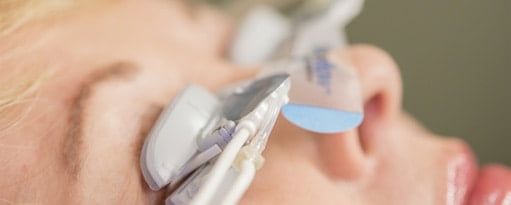
When evaporative dry eye is driven by blocked meibomian glands, LipiFlow goes after the source. A single-use device sits over the eyelid and applies controlled inner-lid heat and outer-lid pressure for about 12 minutes per eye. The combination melts hardened oils inside the glands and gently expresses them out, restoring oil flow back into the tear film.
The evidence supports the approach. In a 2021 systematic review and meta-analysis of 10 randomized controlled trials covering 761 patients, LipiFlow® significantly improved Ocular Surface Disease Index (OSDI) scores, Standard Patient Evaluation of Eye Dryness (SPEED) scores, and meibomian gland function compared with traditional lid hygiene. The American Academy of Ophthalmology’s 2023 review of thermal pulsation evidence concluded that a single 12-minute LipiFlow session can safely improve both subjective symptoms and objective signs of MGD and dry eye.
What does that look like for you? Most patients begin noticing relief within a few weeks. A 2022 controlled-environment study found measurable improvement in symptoms, ocular surface staining, and oil gland secretion at the 12-month mark after a single LipiFlow treatment. Many patients still pair the procedure with at-home lid hygiene, but the gland blockage itself is addressed in a single in-office visit.
LipiFlow is generally most appropriate for patients with confirmed meibomian gland dysfunction on imaging or expression testing, not patients whose dry eye is driven primarily by inflammation or aqueous tear deficiency.
Intense Pulsed Light (IPL) Therapy for Dry Eye
IPL has been used in dermatology for years to calm rosacea and reduce surface inflammation. Eye care discovered it almost by accident: rosacea patients who had IPL treatments around the cheeks and nose came back reporting that their dry eye had improved, too. The mechanism makes sense once you look closely. Controlled pulses of broadband light reduce the abnormal blood vessels and surface inflammation that contribute to meibomian gland dysfunction, while also warming the gland contents to improve oil flow.
The clinical data is strong. A 2022 randomized controlled trial found that four IPL sessions combined with meibomian gland expression significantly improved tear breakup time, meibum quality, eye dryness scores, and the number of expressible glands compared with gland expression alone. A Cochrane systematic review of IPL for MGD identified consistent improvements in tear breakup time and meibomian gland orifice plugging, while noting that more high-quality trials are still needed to fully establish long-term outcomes. Current practice guidelines list IPL as an emerging therapy for evaporative dry eye driven by MGD, particularly when conventional lid hygiene has not worked.
A treatment session takes about 15 minutes. Most patients complete a series of three to four sessions spaced a few weeks apart. There is no real downtime. You may feel a quick warm pulse with each flash. Many patients also notice a cosmetic benefit on the cheeks and around the eyes, since IPL was originally a skin treatment.
IPL is most effective when dry eye is linked to facial rosacea, telangiectasias around the eyelid margins, or persistent meibomian gland inflammation. Pigmented skin types require careful settings, which is one reason an ophthalmology-based team should manage the treatment.
How We Decide Which Treatment You Need
A dry eye evaluation at Alliance Vision Institute is not a five-minute checkup. Your eye care team performs a complete tear film and ocular surface workup that may include:
- Patient symptom questionnaires (OSDI or SPEED)
- Tear film imaging and meibomian gland evaluation
- Tear breakup time and ocular surface staining
- Meibomian gland expression to assess oil quality
- Lash line and lid margin assessment for blepharitis or Demodex
The results tell us which mechanism, or which combination of mechanisms, is driving your symptoms. From there, your treatment plan is built around your biology, not a generic protocol. Some patients benefit most from LipiFlow® alone. Others need IPL to calm inflammation first, then LipiFlow® to clear residual gland blockage. You may need one therapy or a combination, and your plan may evolve over time as your eyes respond.
AVI Optometrists Explain Dry Eye
Dry Eye Before LASIK and Cataract Surgery
Untreated dry eye is one of the most common reasons patients are temporarily disqualified from LASIK, and it is also a leading cause of visual disappointment after cataract surgery. Both procedures depend on a stable tear film for accurate measurements and clear postoperative vision.
If you are considering LASIK eye surgery, PRK, or cataract surgery with advanced IOLs, addressing dry eye first can mean the difference between a sharp, lasting result and ongoing visual fluctuation. Your eye care team will treat the dry eye, re-measure your eyes once the surface stabilizes, and then proceed with the vision correction or cataract plan that fits you.
Why Patients Choose Alliance Vision Institute
Dry eye care at Alliance Vision Institute is led by Dr. Taylor Strange and your eye care team. Dr. Strange is a board-certified ophthalmologist, fellowship-trained at the World College of Refractive Surgery and Visual Sciences, and an FDA Clinical Trial Principal Investigator. He has personally performed more than 25,000 vision correction procedures and is recognized as one of DFW’s “Top Doctors” by Society Life Magazine.
For a dry eye patient, that means your treatment plan is built by a surgeon who understands tear film science at the level required for refractive and cataract surgery, not as a procedure tacked onto a general eye exam. LipiFlow®, IPL, and BlephEx® are run as a coordinated dry eye program, not single devices in isolation.
Across our Fort Worth, Decatur, Northlake, and Southlake offices, AVI has built a practice on:
- 30,000+ happy patients
- 2,000+ five-star reviews
- 61 years of combined experience
Patient Reviews and Testimonials
Meet Your Vision Correction Doctors
Our doctors are more than simply trained in using cutting-edge technology to treat your vision, they’re experts with decades of experience of helping patients see more clearly. Thousands of patients have already experienced the difference our doctors can make, and our doctors are excited to help you see your very best.



Frequently Asked Questions
What Is the Difference Between LipiFlow and IPL?
LipiFlow and IPL treat dry eye through different mechanisms. LipiFlow® applies controlled heat and pressure directly to the inner and outer eyelid to physically melt and express blocked oil from your meibomian glands. IPL uses pulses of light energy on the skin around the eyes to reduce inflammation and abnormal blood vessels that contribute to gland dysfunction. Many patients benefit from both, often with IPL first to reduce inflammation and LipiFlow second to clear residual blockage.
How Long Does Relief From LipiFlow Last?
Most patients experience meaningful symptom relief within several weeks of a LipiFlow® treatment, and clinical evidence suggests improvement can persist for 12 months or longer after a single session. Durability varies based on the severity of your meibomian gland dysfunction and how well you maintain at-home eyelid hygiene afterward. Some patients repeat the treatment annually, others go longer between sessions.
Are LipiFlow and IPL Covered by Insurance?
These advanced dry eye treatments are typically not covered by medical insurance because most carriers classify them as elective. Diagnostic testing for dry eye disease is often covered, even when the treatment itself is not. Your eye care team can review current coverage and self-pay options during your dry eye evaluation.
Are the Treatments Painful?
No. LipiFlow feels like a warm, gentle pressure on the eyelids for about 12 minutes per eye. IPL feels like a brief warm snap of light against the skin around your eyes, with protective shields in place. None of the treatments require anesthesia or sedation, and you can drive yourself home the same day.
Can I Have LASIK if I Already Have Dry Eye?
In most cases, yes, but only after the dry eye is treated and stabilized. Untreated dry eye affects the accuracy of preoperative measurements and the quality of your postoperative vision. Your eye care team treats the dry eye first, repeats your refractive measurements once the surface is stable, and then determines whether LASIK, PRK, or another option fits you best.
How Do I Know Which Treatment I Need?
You do not need to know in advance. The first step is a complete dry eye evaluation, where your eye care team performs imaging and testing to identify which biological mechanism is driving your symptoms. From there, your provider recommends LipiFlow, IPL, BlephEx, or a combination based on what your eyes actually need.
Schedule Your Dry Eye Evaluation
If your eyes feel gritty, burn, water at the wrong times, or blur during the day, you do not have to keep cycling through drops. Alliance Vision Institute serves patients across Fort Worth, Dallas, Southlake, Northlake, Decatur, and the broader DFW metroplex with advanced, evidence-based dry eye care. Book your evaluation today.
Source Index
- Stapleton F, et al. “TFOS DEWS II Epidemiology Report.” The Ocular Surface, 2017. https://doi.org/10.1016/j.jtos.2017.05.003
- Farrand KF, et al. “Prevalence of Diagnosed Dry Eye Disease in the United States Among Adults Aged 18 Years and Older.” American Journal of Ophthalmology, 2017. https://pubmed.ncbi.nlm.nih.gov/28705660/
- Hu J, Zhu S, Liu X. “Efficacy and safety of a vectored thermal pulsation system (LipiFlow®) in the treatment of meibomian gland dysfunction: a systematic review and meta-analysis.” Graefe’s Archive for Clinical and Experimental Ophthalmology, 2022. https://doi.org/10.1007/s00417-021-05363-1
- Tao JP, et al. “Thermal Pulsation in the Management of Meibomian Gland Dysfunction and Dry Eye: A Report by the American Academy of Ophthalmology.” Ophthalmology, 2023. https://doi.org/10.1016/j.ophtha.2023.07.009
- Narang P, et al. “Evaporative dry eye disease due to meibomian gland dysfunction: Preferred practice pattern guidelines for diagnosis and treatment.” Indian Journal of Ophthalmology, 2023. https://doi.org/10.4103/IJO.IJO_2841_22
- Toyos R, Desai NR, Toyos M, Dell SJ. “Intense pulsed light improves signs and symptoms of dry eye disease due to meibomian gland dysfunction: A randomized controlled study.” PLOS ONE, 2022. https://doi.org/10.1371/journal.pone.0270268
- Cote S, et al. “Intense pulsed light (IPL) therapy for the treatment of meibomian gland dysfunction.” Cochrane Database of Systematic Reviews, 2020. https://doi.org/10.1002/14651858.CD013559
- Novo-Diez A, et al. “Effect of a single vectored thermal pulsation treatment of Meibomian gland dysfunction patients under controlled environmental conditions.” Scientific Reports, 2022. https://doi.org/10.1038/s41598-022-20994-y
The doctors at Alliance Vision Institute have reviewed and approved this content.
Page Updated: