

Advanced Cataract Surgery
in Southlake, TX
Cataracts are a natural part of the aging process, but they do not have to limit your quality of life. At Alliance Vision Institute, our team provides comprehensive eye care and state of the art vision correction procedures to help patients in Southlake and the surrounding Dallas, Fort Worth Metroplex see clearly again. Whether you are struggling with blurry vision or difficulty driving at night, our board certified cataract surgeons are here to develop personalized treatment plans tailored to your unique eyesight needs.
A cataract is a progressive clouding of the eye’s natural lens. This lens, located behind the iris and the pupil, works much like a camera lens, focusing light onto the retina to produce clear images. Over time, proteins in the lens begin to clump together, creating a cloudy area that interferes with vision.
According to the National Eye Institute, more than half of all Americans age 80 or older either have cataracts or have had cataract surgery.
 Trusted Source
Cataract Data and Statistics
National Eye Institute
Go to Source
1
While they are most common in older adults, factors such as diabetes, smoking, and prolonged UV exposure can increase the risk of developing them earlier in life.
Trusted Source
Cataract Data and Statistics
National Eye Institute
Go to Source
1
While they are most common in older adults, factors such as diabetes, smoking, and prolonged UV exposure can increase the risk of developing them earlier in life.
Many patients in our Southlake office report a gradual decline in their eye health. Common signs that it may be time for an eye exam include:
Trusted Source
Cataracts (Age-Related)
Cleveland Clinic
Go to Source
2
Cataract surgery is one of the most common and successful medical procedures performed today. The goal of the surgery is to remove the cloudy natural lens and replace it with a clear artificial lens, known as an intraocular lens (IOL).
“Modern cataract surgery is no longer just about removing a cloudy lens, it is about customizing a patient’s vision to match their daily activities and hobbies,” says Dr. Taylor Strange, founder of Alliance Vision Institute.
At Alliance Vision Institute, we utilize the latest technology to ensure the highest level of precision.
Laser-assisted techniques can provide significantly higher precision in corneal incisions and lens positioning compared to manual methods.
Trusted Source
The Latest Evidence with Regards to Femtosecond Laser-Assisted Cataract Surgery and Its Use Post 2020
Levitz LM, Dick HB, Scott W, Hodge C, Reich JA
Go to Source
3
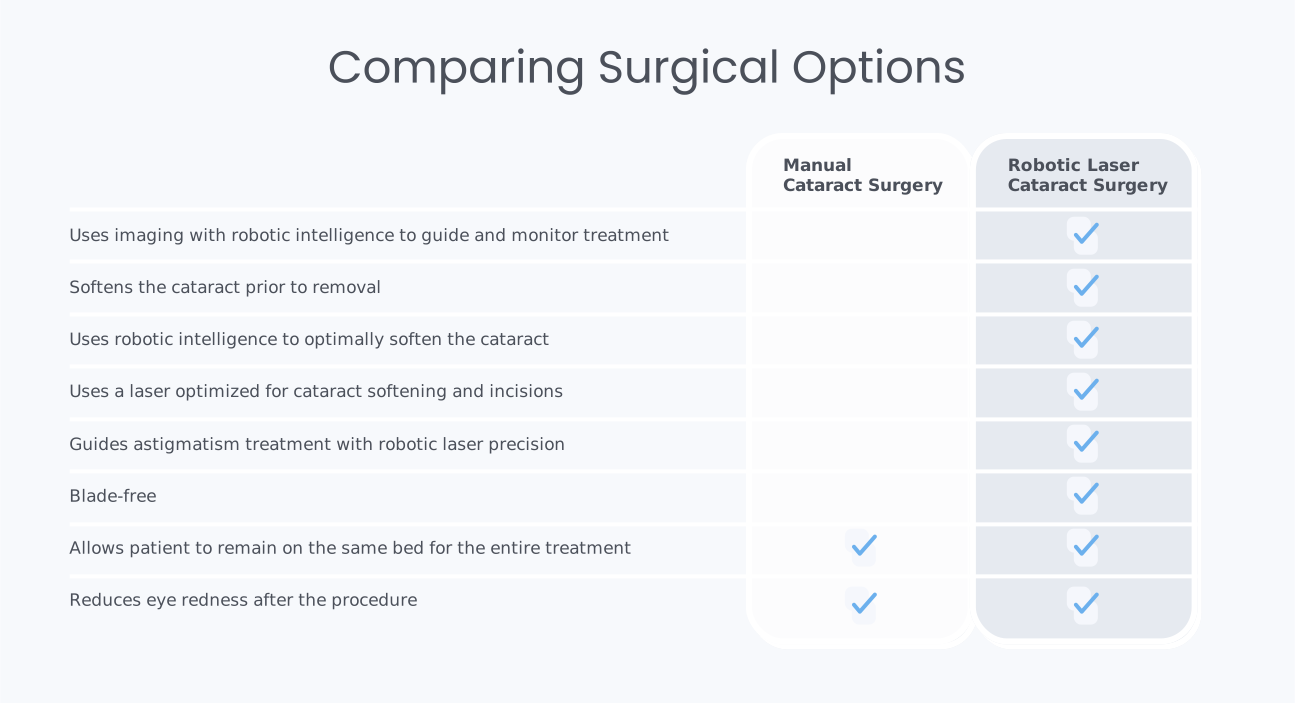
We believe that providing the best eye care services requires investing in the most advanced tools available.
The ALLY system represents the next generation of laser vision correction. By combining a femtosecond laser with high-definition imaging, it allows our surgeons to perform bladeless surgery with unparalleled accuracy.
Our Southlake office utilizes the Zeiss Artevo® 800, a digital microscope that provides 3D, high-resolution visualization of the eye. This “heads-up” technology allows the surgeon to view the surgical field on a large digital screen, providing greater detail than traditional microscopic eyepieces.
Trusted Source
Seeing more with the first digital microscope
Zeiss
Go to Source
4
,
Trusted Source
Three-Dimensional Heads-up Cataract Surgery Using Femtosecond Laser: Efficiency, Efficacy, Safety, and Medical Education-A Randomized Clinical Trial. Transl Vis Sci Technol
Wang K, Song F, Zhang L, Xu J, Zhong Y, Lu B, Yao K.
Go to Source
5
One of the most important decisions you will make is selecting the right lens implant. Your choice depends on your lifestyle, eye health, and whether you want to reduce your dependence on glasses or contact lenses after surgery.
Cataract surgery is typically an outpatient procedure performed at our eye center. The surgery itself usually takes less than 30 minutes.
Most patients notice a significant improvement in their eyesight within 24 to 48 hours. Complete healing generally occurs within eight weeks.
While cataract surgery has a high success rate, like any surgical procedure, it carries some risks. These can include infection, bleeding, inflammation, or retinal detachment. During your consultation at our Southlake location, we will provide a detailed discussion of these risks and how our state of the art technology helps minimize them.
Alliance Vision Institute is more than just a cataract surgery center. We provide a full range of eye care services to the Southlake community, including:
When searching for an eye doctor in Southlake, experience and technology matter. Alliance Vision Institute is led by Dr. Taylor Strange, a board certifiedophthalmologist with over 15 years of experience in the medical field. Our practice is dedicated to providing a patient-first experience in a comfortable, professional environment, combining decades of surgical expertise with a commitment to the latest medical advancements.
Dr. Taylor Strange is the founder and chief surgeon of Alliance Vision Institute. He is a Texas native who earned his medical degree from the University of North Texas Health Science Center (TCOM) in 2010. He completed a transitional internship at John Peter Smith Hospital in Fort Worth followed by his ophthalmology residency at the University of Louisville Department of Ophthalmology & Visual Sciences.
“Very efficient and courteous staff. Wonderful experience with my cataract surgery. Very easy and it was a pleasure to have it done. Experienced no pain at all during the whole process. Dr. Strange is an amazing surgeon. Karla was a wonderful person to work with.”
– H.D. Google Review
⭐⭐⭐⭐⭐
“It was an awesome experience having my cataract surgery here. Place is very clean and all of the staff is great. I am very happy with results. They made me feel very comfortable and not afraid. Karla was very helpful and caring and Dr Strange was very nice and wonderful bedside manners.”
– J.S. Google Review
⭐⭐⭐⭐⭐
If you are looking for cataract surgery in Southlake, TX, Alliance Vision Institute offers world-class surgical care right in your community. Our Southlake office is conveniently located on Southlake Blvd, serving patients from Arlington, Dallas, Fort Worth, and across the Metroplex.
Most medical insurance plans, including Medicare, cover the cost of basic cataract surgery and monofocal lenses. Advanced technology options, such as multifocal lenses or laser-assisted surgery, may involve out-of-pocket costs. Our team will work with you to explain your coverage and available financing options.
Most Southlake patients observe a notable boost in their clear vision within 24 to 48 hours. While you can generally return to your standard light activities and work the following day, the full corneal healing process typically spans four to six weeks. During your follow up visits at our Southlake office, we will provide specific guidance on when it is safe to resume driving or engage in more strenuous exercise.
Your need for glasses after surgery depends largely on the type of intraocular lens (IOL) you select. Standard monofocal lens implants usually mean you will still need reading glasses for close-up work. However, if you opt for premium multifocal or light adjustable lenses, many patients achieve a high level of visual freedom and rarely need glasses for either distance or near vision.
Typically, our cataract surgeons prefer to treat one eye at a time, usually spacing the procedures about one to two weeks apart. This staggered approach allows the first eye to begin its recovery and ensures you maintain functional eyesight in the other eye during the initial healing phase.
Intraocular lenses are designed to be a permanent part of your eye health and are intended to last for the rest of your life. They are crafted from highly durable, biocompatible materials that do not wear out or degrade, meaning you should not need to have the lens replaced in the future.
Cataract surgery is an outpatient procedure. You should expect to be at our eye center for approximately two to three hours in total, even though the actual eye surgery takes less than 10 minutes. Because you will receive a mild sedative to ensure you are relaxed, you must have a designated driver to take you home.
If cataracts are left untreated, they will continue to thicken and cloud your eyesight, which can eventually lead to legal blindness. In more advanced stages, the cataract can become “hypermature,” which increases the complexity of the surgery and raises the risk of other eye conditions such as glaucoma or intraocular inflammation.
If cataracts or blurry vision are beginning to impact your independence and daily life, now is the perfect time to seek professional care. Contact Alliance Vision Institute today to arrange your consultation at our Southlake office. Our experts will walk you through your personalized laser cataract surgery options and help you choose the best path for your eyesight.
1 National Eye Institute. Cataract Data and Statistics. Available: https://www.nei.nih.gov/eye-health-information/eye-conditions-and-diseases/cataracts. Accessed January 8, 2026.
2 Cleveland Clinic. Cataracts (Age-Related). https://my.clevelandclinic.org/health/diseases/8589-cataracts-age-related. Accessed January 8, 2026.
3 Levitz LM, Dick HB, Scott W, Hodge C, Reich JA. The Latest Evidence with Regards to Femtosecond Laser-Assisted Cataract Surgery and Its Use Post 2020. Clin Ophthalmol. 2021 Mar 30;15:1357-1363. doi: 10.2147/OPTH.S306550. PMID: 33833494; PMCID: PMC8019659. Available: https://pubmed.ncbi.nlm.nih.gov/33833494/. Accessed January 8, 2026.
4 Zeiss. Seeing more with the first digital microscope. Available: https://www.zeiss.com/meditec/en/products/surgical-microscopes/ophthalmic-microscopes/artevo-800.html. Accessed April 4, 2026.
5 Wang K, Song F, Zhang L, Xu J, Zhong Y, Lu B, Yao K. Three-Dimensional Heads-up Cataract Surgery Using Femtosecond Laser: Efficiency, Efficacy, Safety, and Medical Education-A Randomized Clinical Trial. Transl Vis Sci Technol. 2021 Aug 2;10(9):4. doi: 10.1167/tvst.10.9.4. PMID: 34342608; PMCID: PMC8340661. Available: https://www.ncbi.nlm.nih.gov/pmc/articles/PMC8340661/. Accessed January 8, 2026.
The doctors at Alliance Vision Institute have reviewed and approved this content.
Page Updated:


